
Puzzleprime Deduction
🔍 Deduction • Advanced
Had Had Had Had Had
A teacher in English had asked James and John to describe a man who had suffered from a cold in the past. James while John had had had had had had had had had had had a better effect on the teacher.
Add punctuation to the sentence in bold, so that it makes sense.
Add punctuation to the sentence in bold, so that it makes sense.
Tap to see the conclusion
🔍 Deduction • Easy
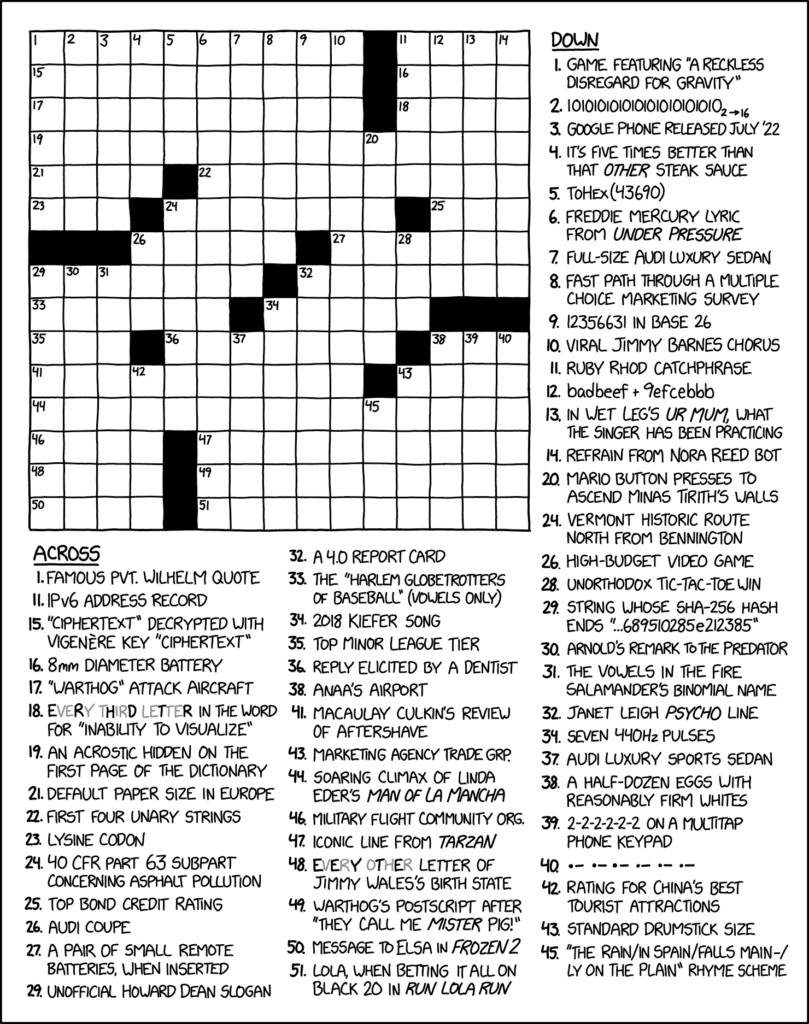
XKCD Crossword
Can you solve XKCD’s crossword puzzle?
Tap to see the conclusion
🔍 Deduction • Medium
Buried Up to Neck
Three friends, Adam, Bob, and Charlie are buried in the sand up to their necks, all facing West. Charlie can see both Adam and Bom, Bom can see only Adam, and Adam cannot see anyone. Black and white hats are placed on their heads. The three friends are told that there is at least one hat from each color, and then they are asked whether anyone can guess the color of their own hat.
After a few minutes, one of them answers. Who is that?
After a few minutes, one of them answers. Who is that?
Tap to see the conclusion
🔍 Deduction • Medium
Third Business Day
What is the chance that the third business day of a month is Wednesday?
Tap to see the conclusion
🔍 Deduction • Advanced
Mirrors
Why do mirrors flip left and right but do not flip up and down?
Tap to see the conclusion
🔍 Deduction • Advanced

Sunome Variations
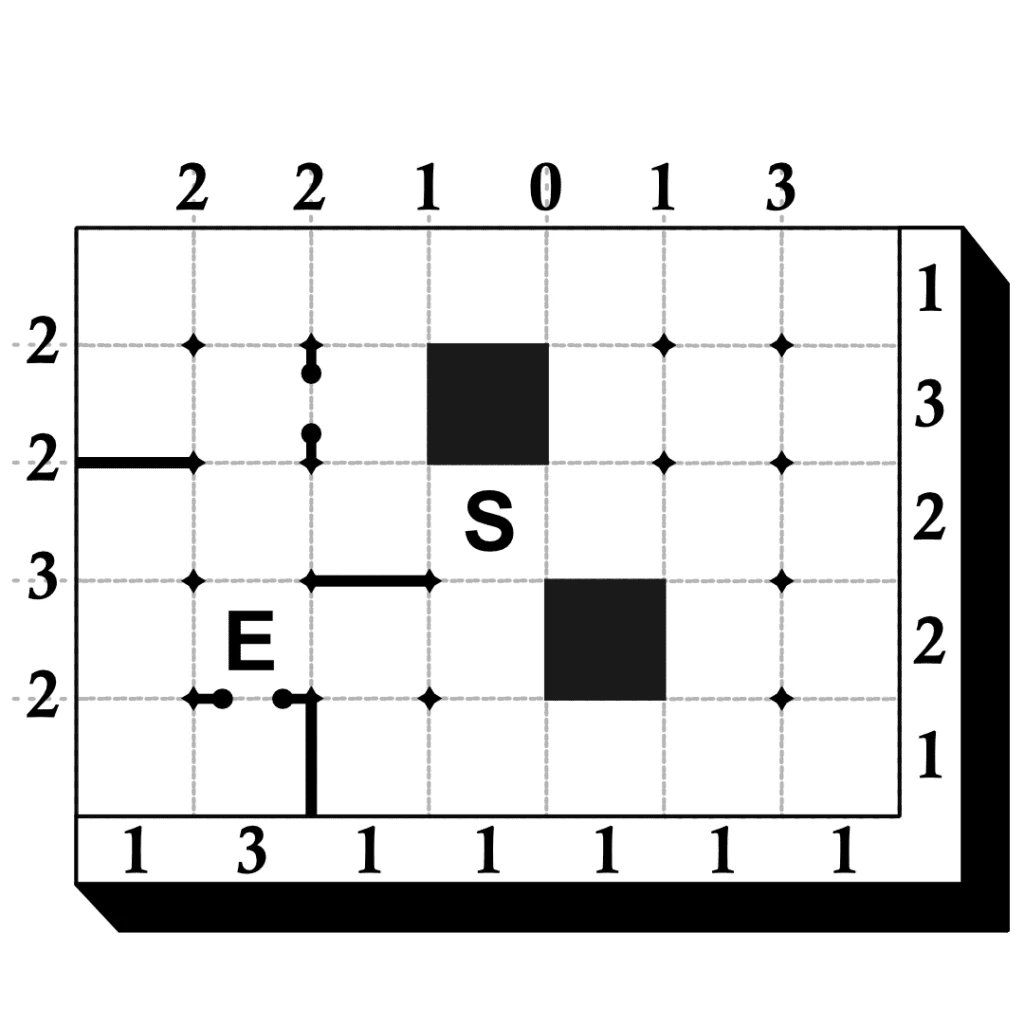
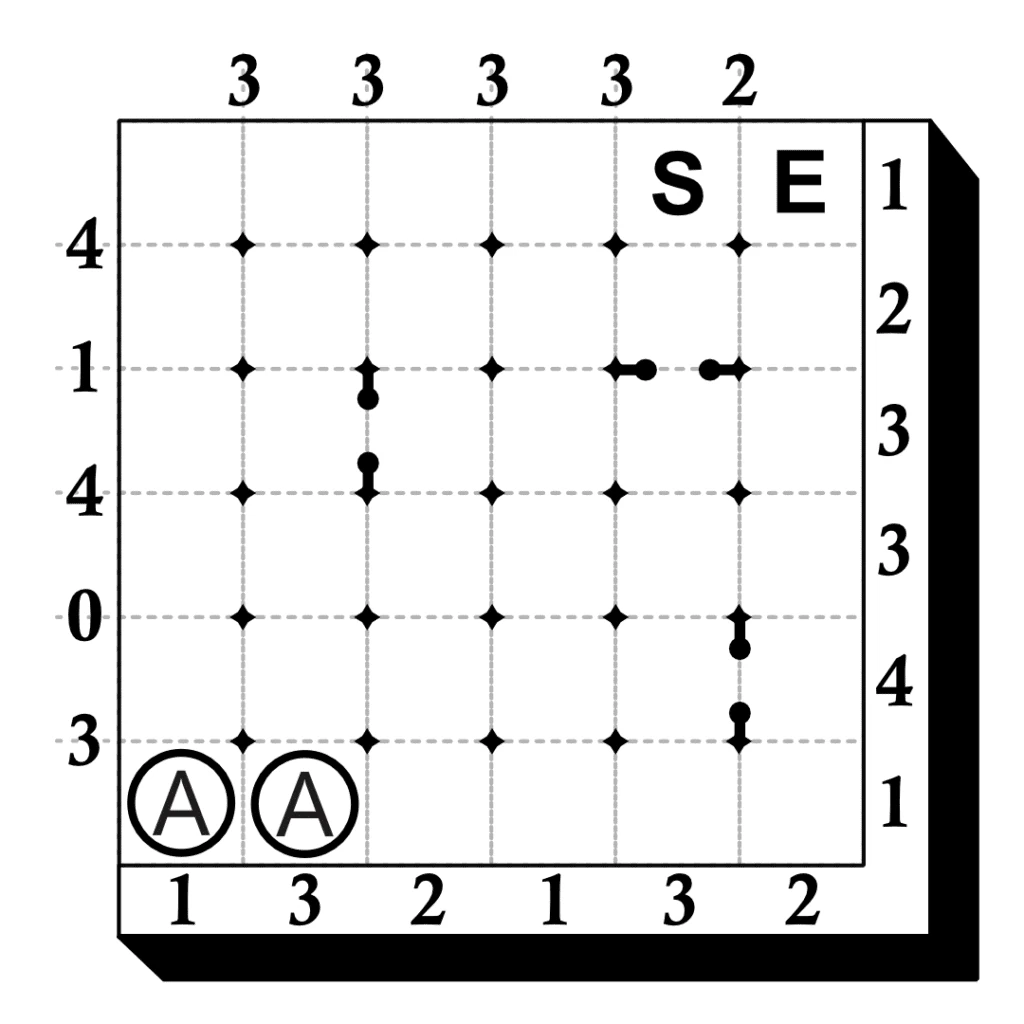
The main challenge of a Sunome puzzle is drawing a maze. Numbers surrounding the outside of the maze border give an indication of how the maze is to be constructed. To solve the puzzle you must draw all the walls where they belong and then draw a path from the Start square to the End square.
The walls of the maze are to be drawn on the dotted lines inside the border. A single wall exists either between 2 nodes or a node and the border. The numbers on the top and left of the border tell you how many walls exist on the corresponding lines inside the grid. The numbers on the right and bottom of the border tell you how many walls exist in the corresponding rows and columns. In addition, the following must be true:
Each puzzle has a unique solution.
There is only 1 maze path to the End square.
Every Node must have a wall touching it.
Walls must trace back to a border.
If the Start and End squares are adjacent to each other, a wall must separate them.
Start squares may be open on all sides, while End squares must be closed on 3 sides.
You cannot completely close off any region of the grid.
In addition, these variations of Sunome have the following extra features:
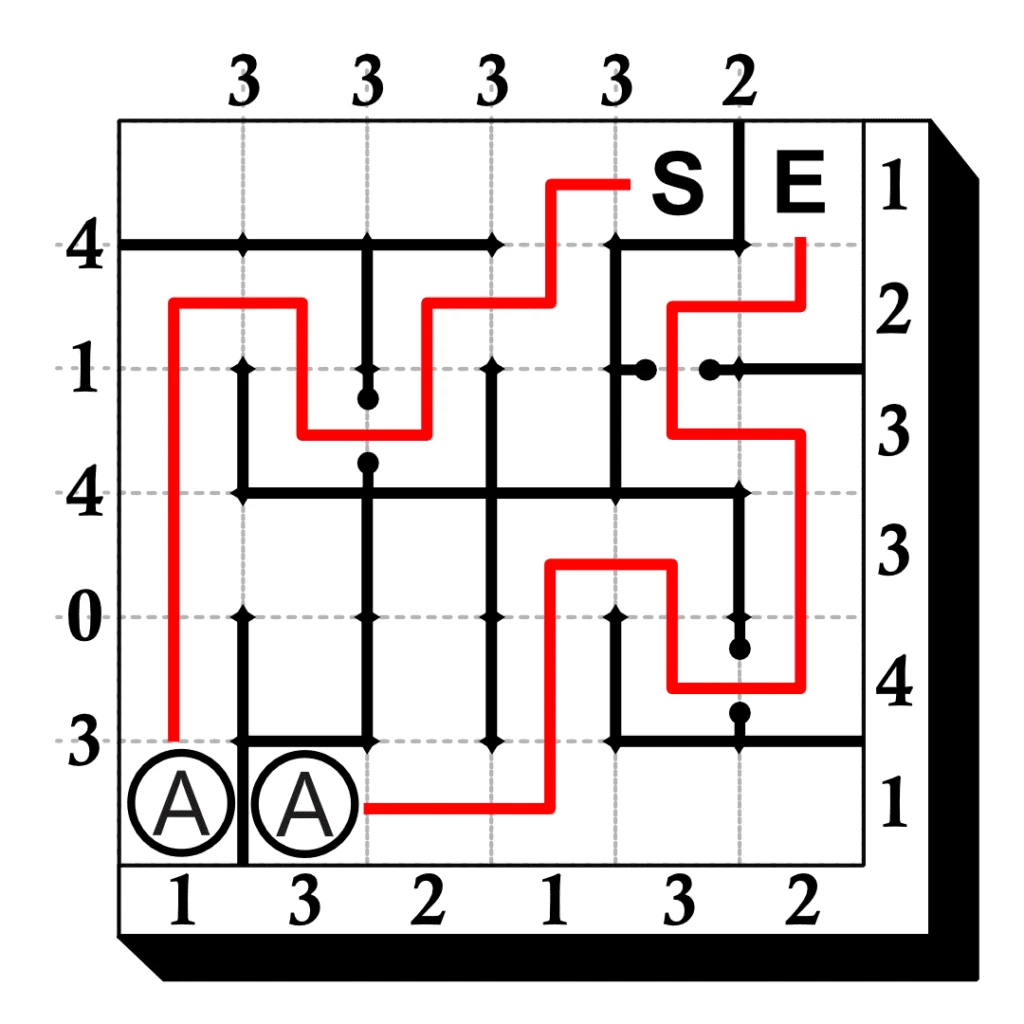
Paths (borders with a hole in the middle) designate places where the solution should pass through.
Pits (black squares) designate places where the solution does not pass through.
Portals (circled letters) designate places where the solution should pass through and teleport from one portal to the other.
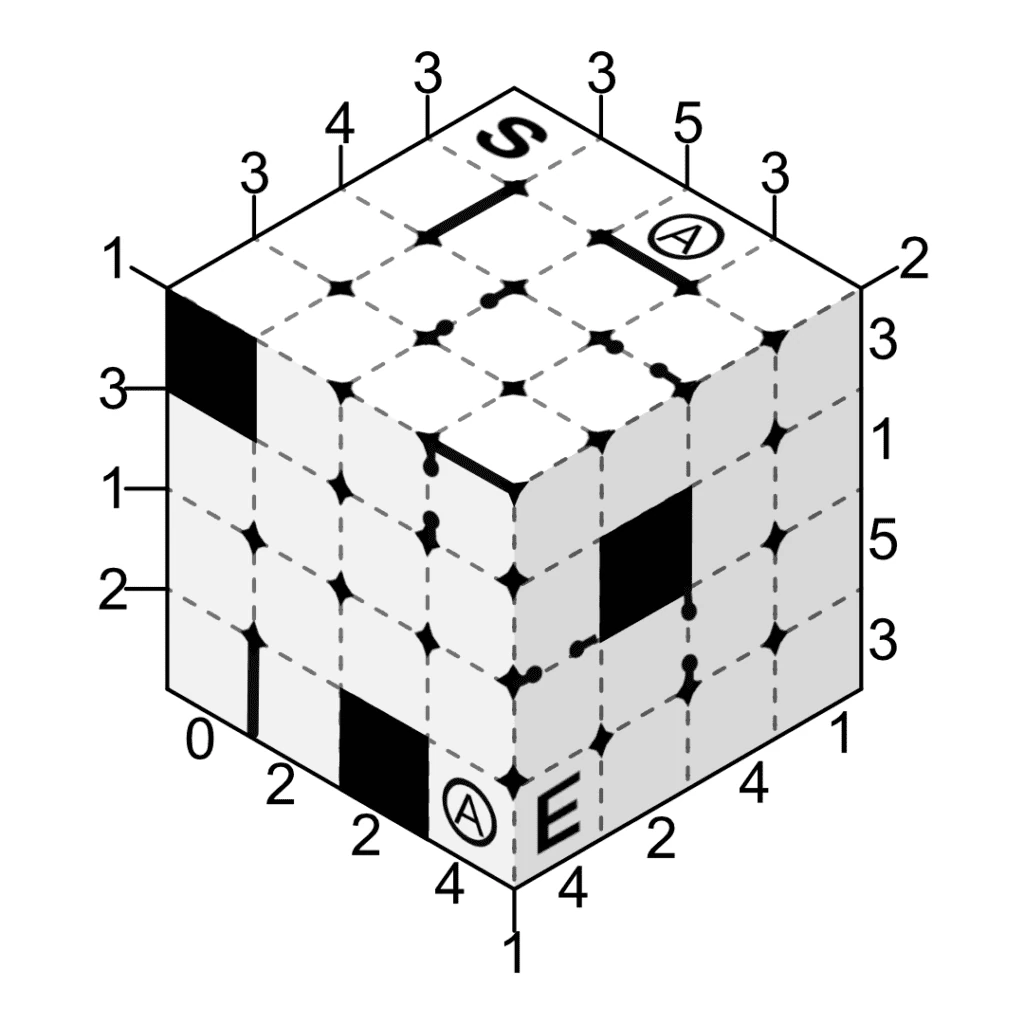
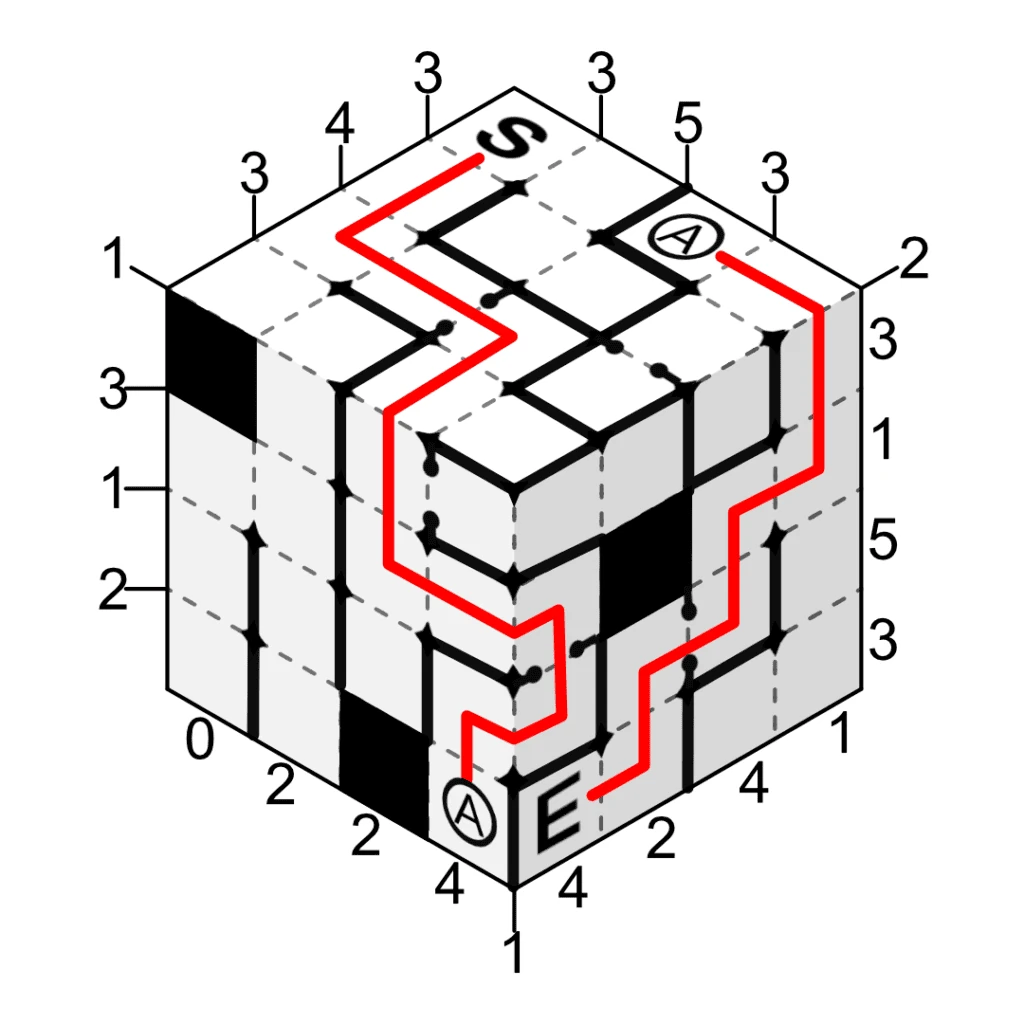
Sunome Cubed is solved similarly but on the surface of a cube. The numbers on the top right, top left, and center left of the border tell you how many walls exist on the corresponding pairs of lines inside the grid. The numbers on the center right, bottom right, and bottom left of the border tell you how many walls exist in the corresponding pairs of rows/columns.
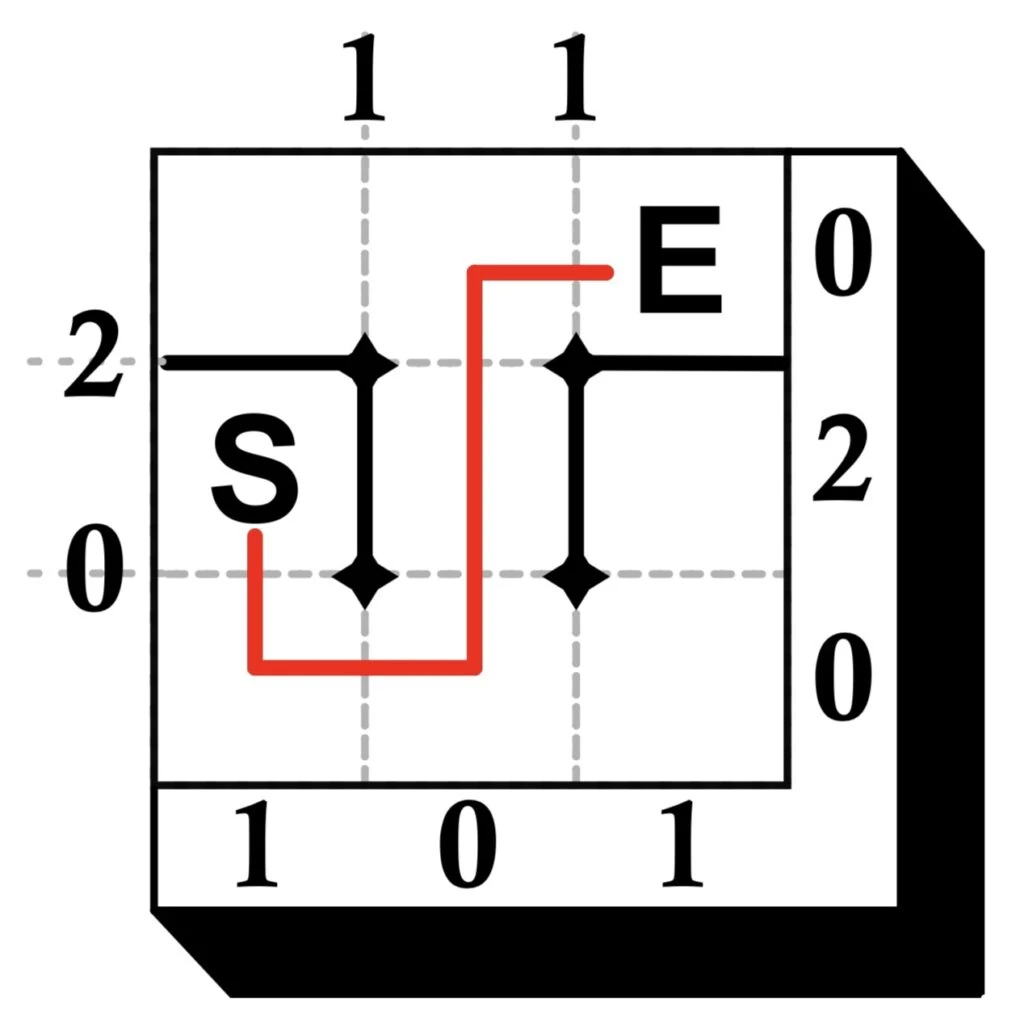
Examine the first example, then solve the other three puzzles.
EXAMPLE
Paths and Pits
Paths and Portals
Sunome Cubed
The walls of the maze are to be drawn on the dotted lines inside the border. A single wall exists either between 2 nodes or a node and the border. The numbers on the top and left of the border tell you how many walls exist on the corresponding lines inside the grid. The numbers on the right and bottom of the border tell you how many walls exist in the corresponding rows and columns. In addition, the following must be true:
Each puzzle has a unique solution.
There is only 1 maze path to the End square.
Every Node must have a wall touching it.
Walls must trace back to a border.
If the Start and End squares are adjacent to each other, a wall must separate them.
Start squares may be open on all sides, while End squares must be closed on 3 sides.
You cannot completely close off any region of the grid.
In addition, these variations of Sunome have the following extra features:
Paths (borders with a hole in the middle) designate places where the solution should pass through.
Pits (black squares) designate places where the solution does not pass through.
Portals (circled letters) designate places where the solution should pass through and teleport from one portal to the other.
Sunome Cubed is solved similarly but on the surface of a cube. The numbers on the top right, top left, and center left of the border tell you how many walls exist on the corresponding pairs of lines inside the grid. The numbers on the center right, bottom right, and bottom left of the border tell you how many walls exist in the corresponding pairs of rows/columns.
Examine the first example, then solve the other three puzzles.
EXAMPLE
Paths and Pits
Paths and Portals
Sunome Cubed
Tap to see the conclusion
🔍 Deduction • Advanced
The Four Oaks
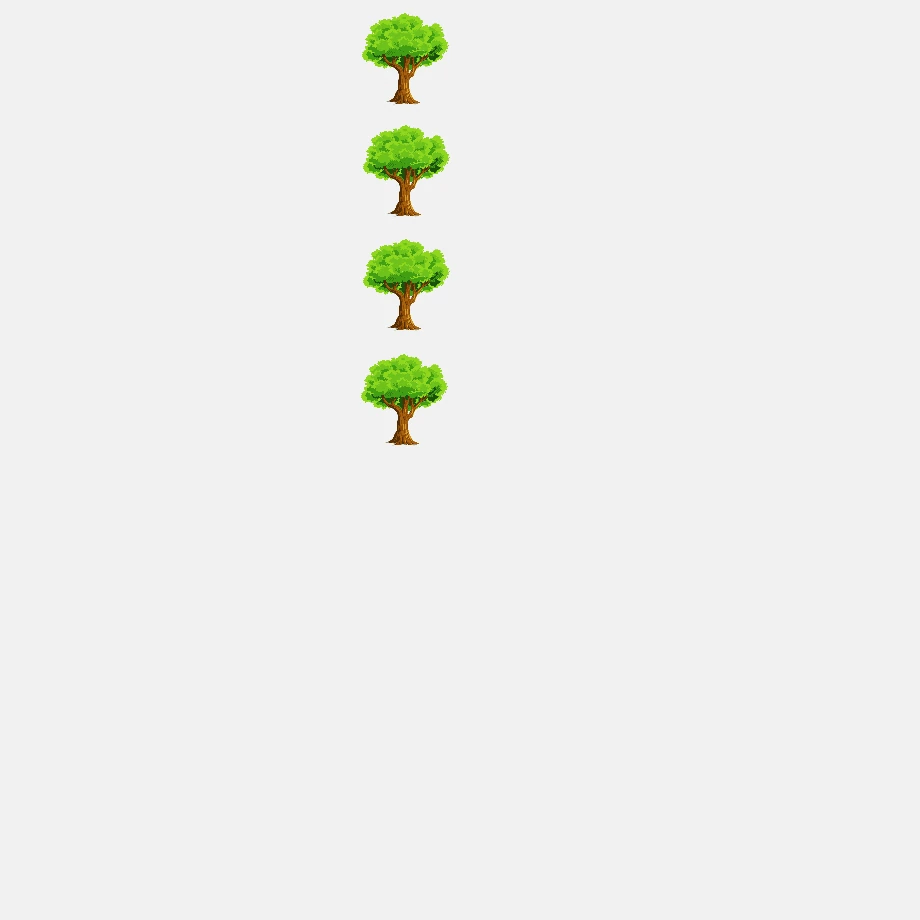
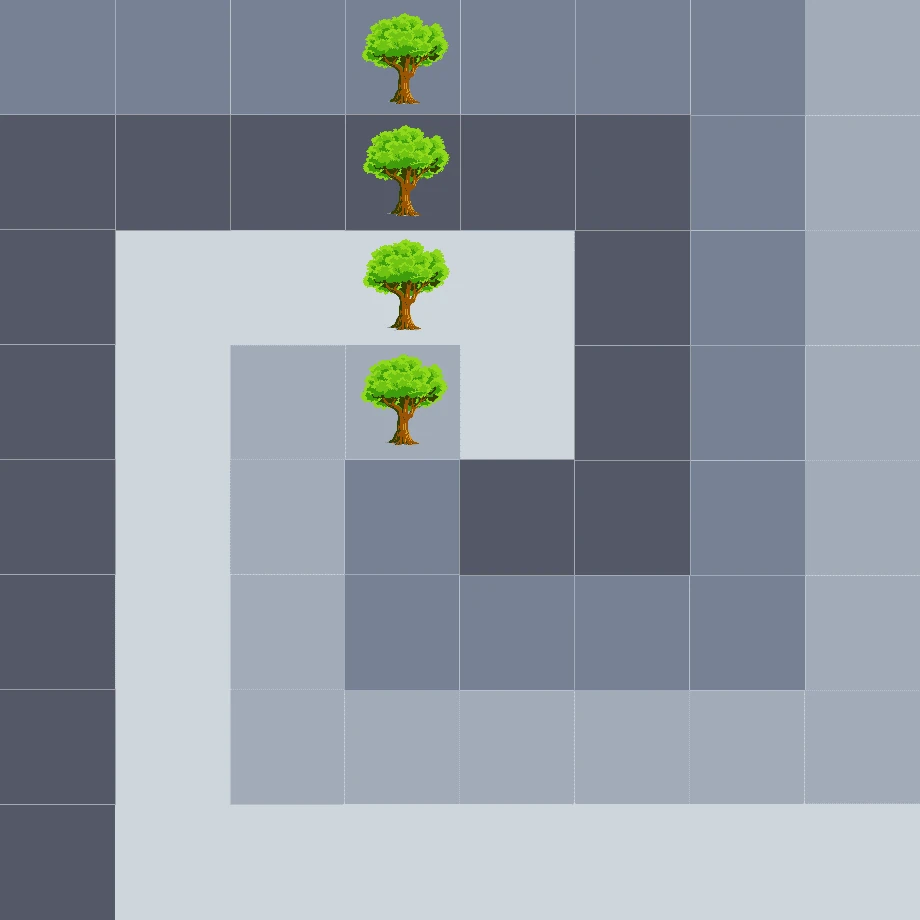
A father left to his four sons this square field, with the instruction that they divide it into four pieces, each of the same shape and size, so that each piece of land contained one of the trees. How did they manage it?
Tap to see the conclusion
🔍 Deduction • Expert
Imprisoned Logicians
Two friends, logicians – Ein and Stein – get imprisoned in two distant cells in a castle. Both cells have just one door, and a window with 8 bars in the first cell, and 12 bars in the second cell. The first day both logicians get the same letter from the prison master:
“The total number of bars in the two prison cells in this castle is either 18 or 20. Starting tomorrow, every morning I will go first to Ein and then to Stein, and will ask how many bars the other logician has. If one of you answers correctly, I will immediately let both of you leave the castle. If one of you answers incorrectly, I will execute both of you. Of course, you can always decide not to answer and just stay imprisoned.
I have sent a copy of this letter to you and your friend. There is no point in trying to communicate with him – your cells are far away from each other, and he won’t hear you.”
Will the logicians manage to escape the castle eventually? When will they do it?
“The total number of bars in the two prison cells in this castle is either 18 or 20. Starting tomorrow, every morning I will go first to Ein and then to Stein, and will ask how many bars the other logician has. If one of you answers correctly, I will immediately let both of you leave the castle. If one of you answers incorrectly, I will execute both of you. Of course, you can always decide not to answer and just stay imprisoned.
I have sent a copy of this letter to you and your friend. There is no point in trying to communicate with him – your cells are far away from each other, and he won’t hear you.”
Will the logicians manage to escape the castle eventually? When will they do it?
Tap to see the conclusion
🔍 Deduction • Advanced
Get One Hundred
9 8 7 6 5 4 3 2 1 = 1 0 0
Add 3 pluses and 1 minus (not necessarily in that order) anywhere above in order to get a valid equality.
Add 3 pluses and 1 minus (not necessarily in that order) anywhere above in order to get a valid equality.
Tap to see the conclusion
🔍 Deduction • Medium
Five Points, Ten Distances
Five points, A, B, C, D, and E, lie on a line. The distances between them in ascending order are: 2, 5, 6, 8, 9, X, 15, 17, 20, and 22. What is X?
Tap to see the conclusion