
Puzzleprime Difficulty Advanced
🔥 Insight • Advanced
Mountain Hike
A man decides to climb a mountain. He starts at sunrise from the bottom of the mountain and arrives at the top at sunset. He sleeps there and on the next day he goes back the same way, descending at higher speed. Prove that there is some point of his path, on which the man will be at the same time on both days.
Tap reveal to see the solution
🔥 Chess • Advanced
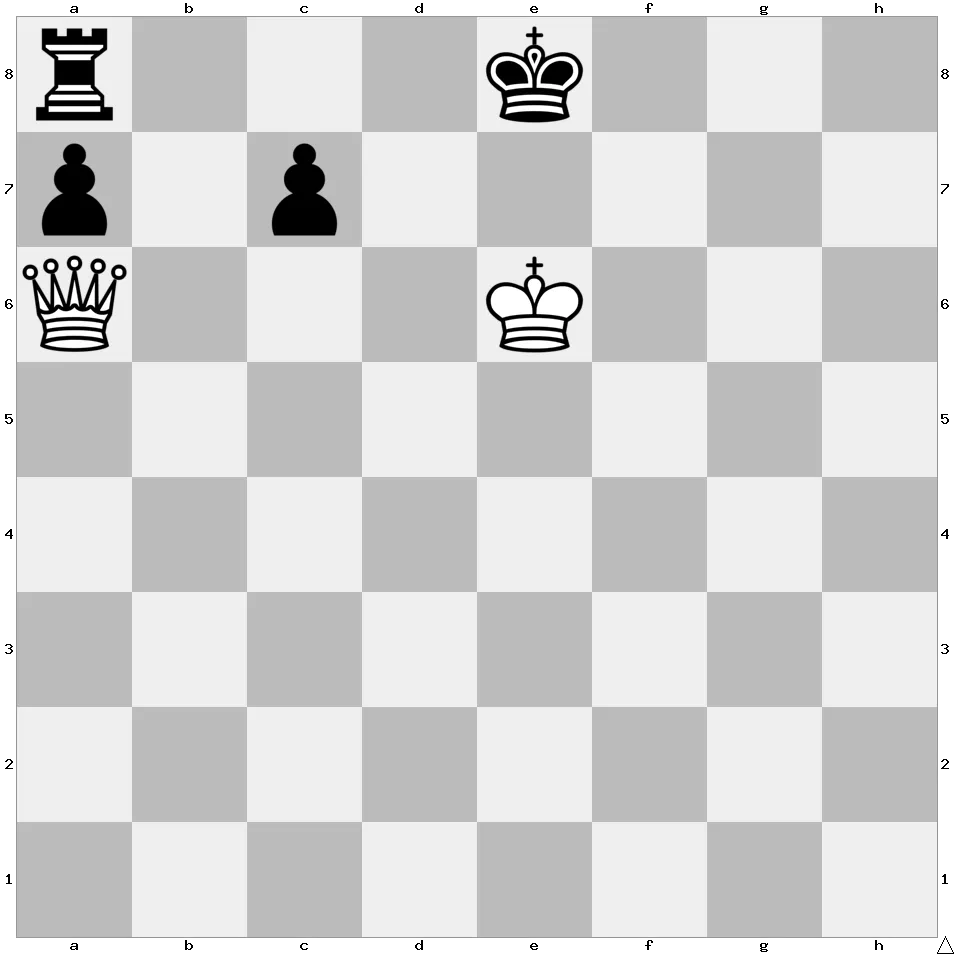
Mate No Matter What
If White is to play, can he always mate Black in 2 moves, regardless of the moves played before?
Tap reveal to see the solution
🔥 Deduction • Advanced
Mirrors
Why do mirrors flip left and right but do not flip up and down?
Tap reveal to see the solution
🔥 Deduction • Advanced
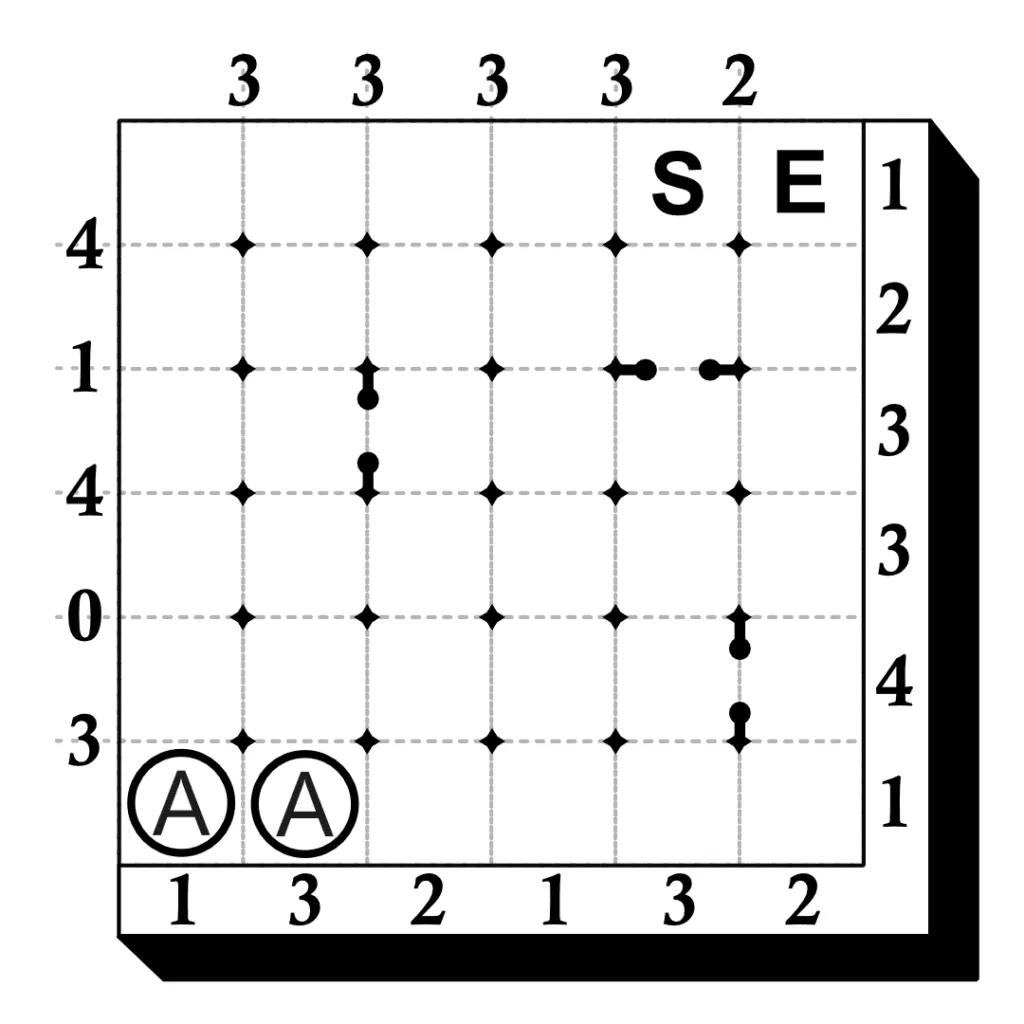
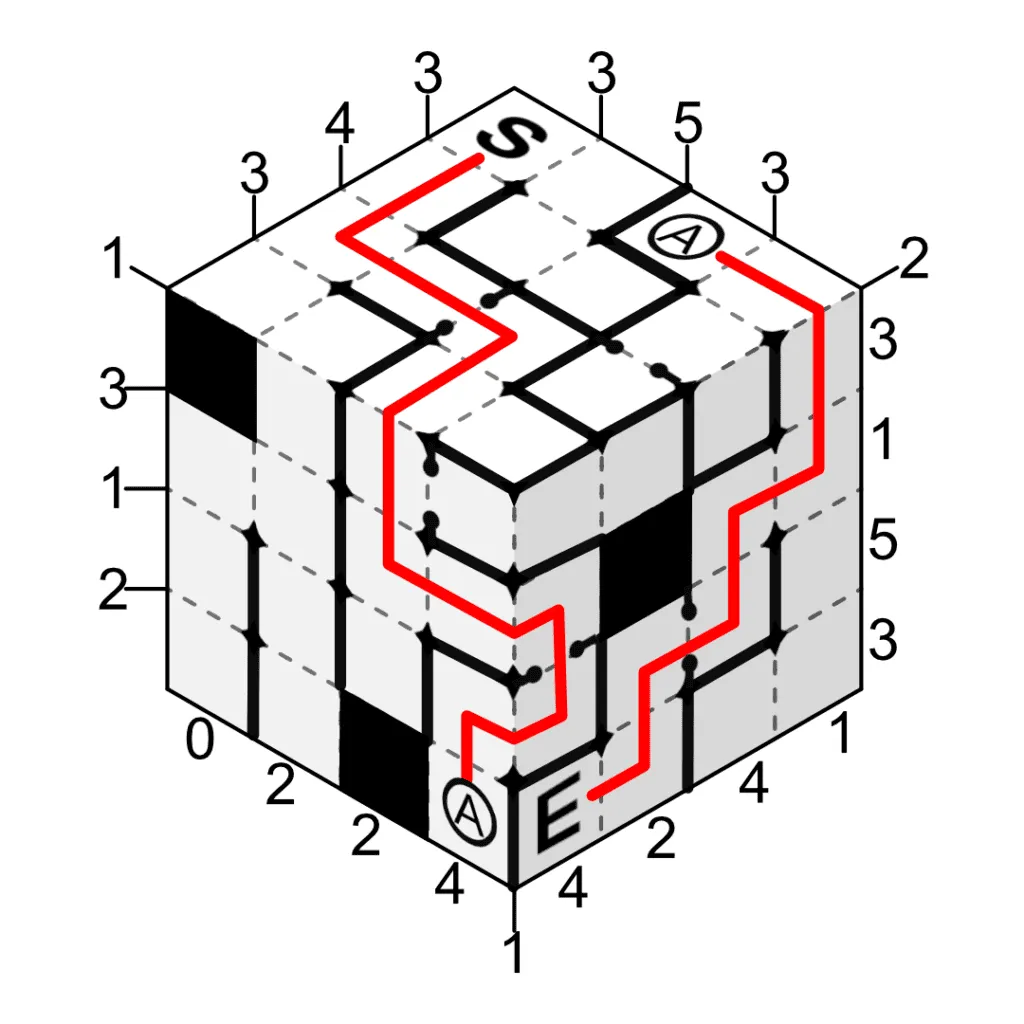
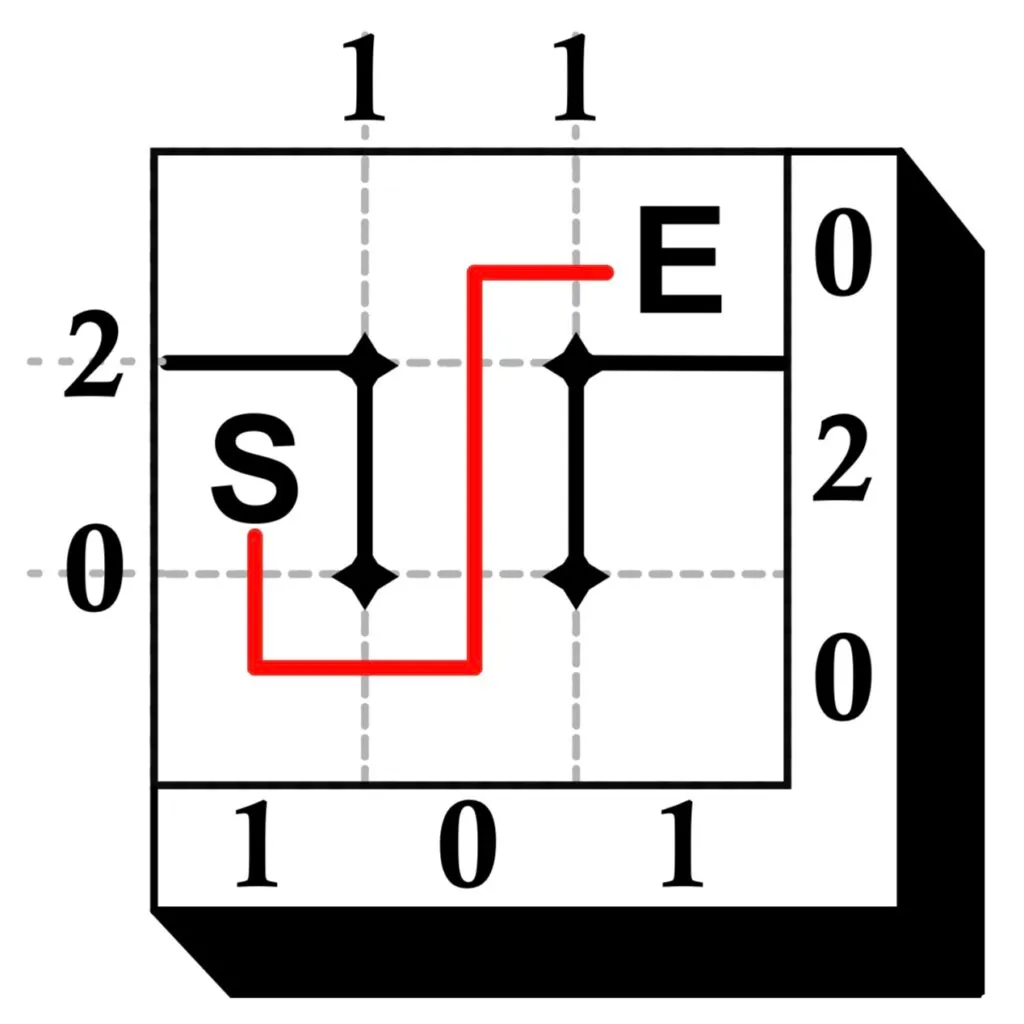

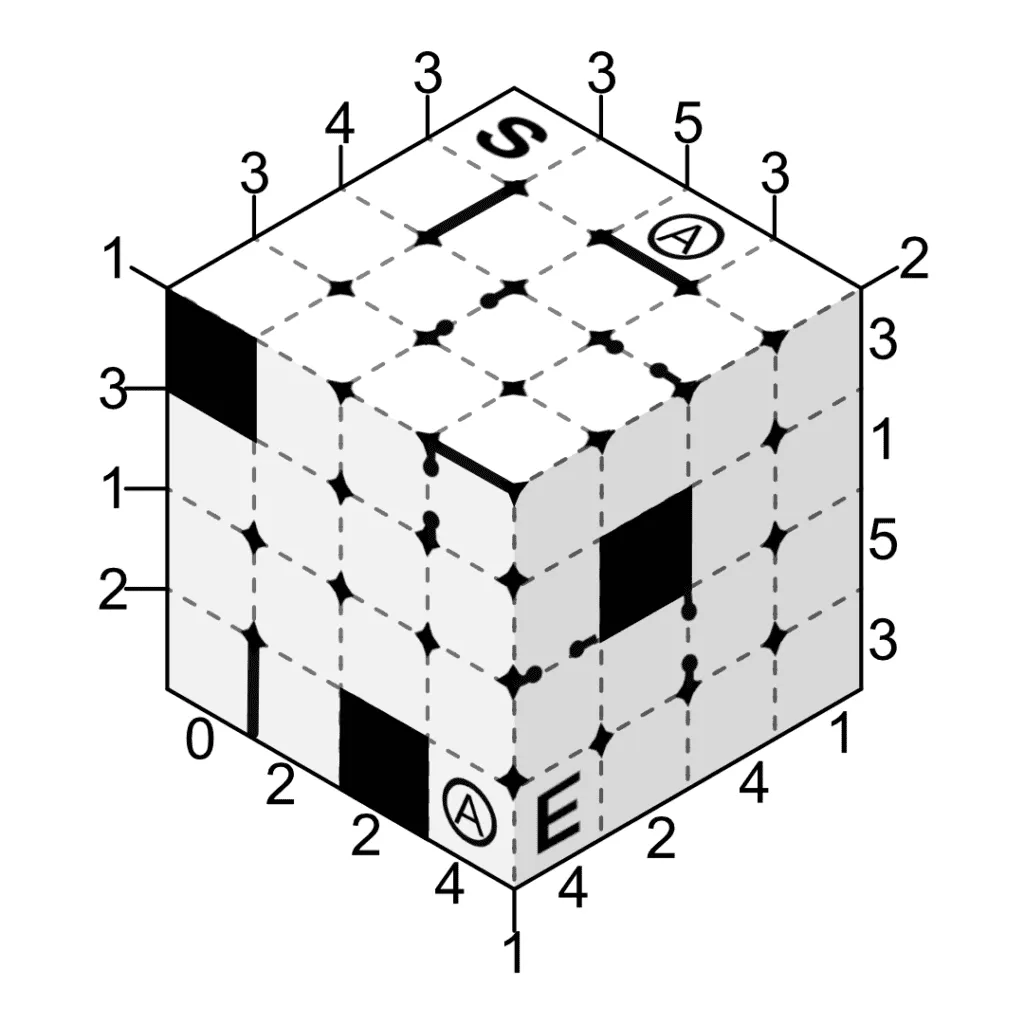
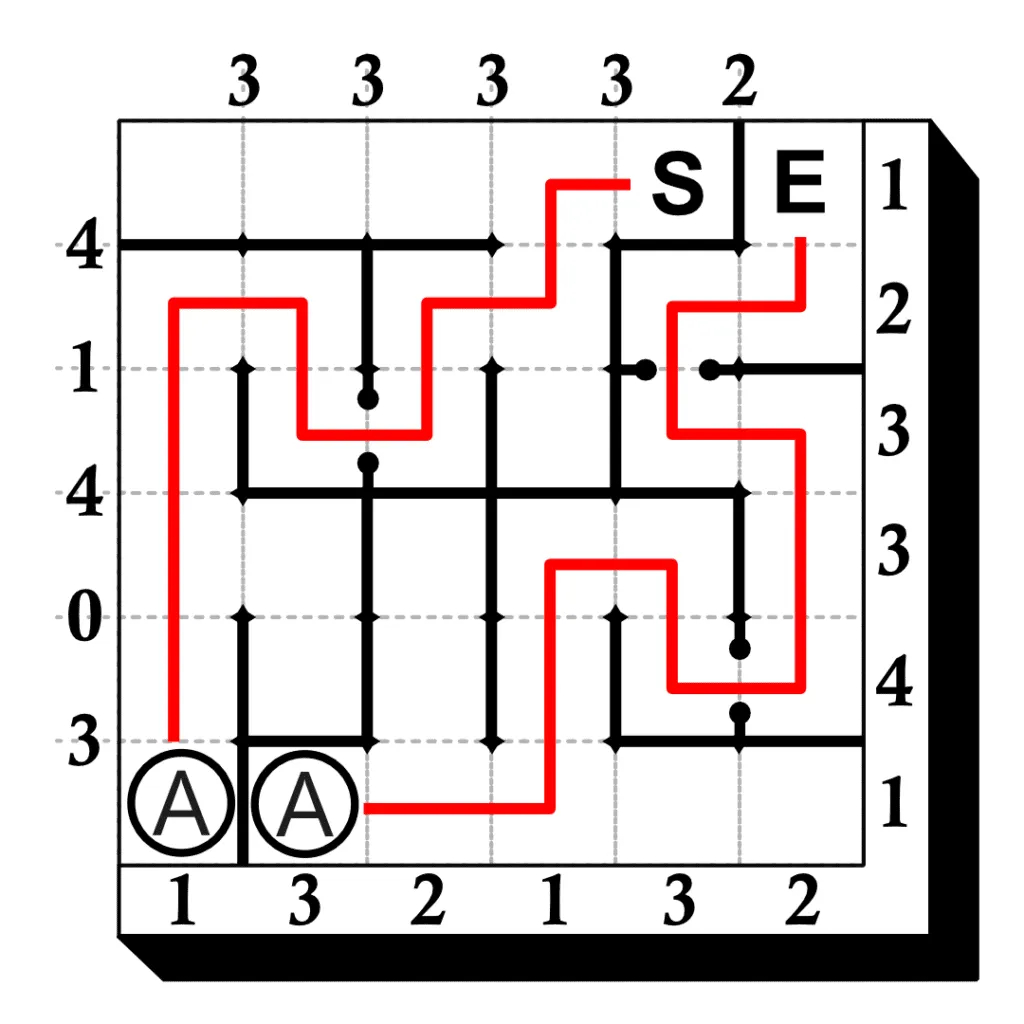
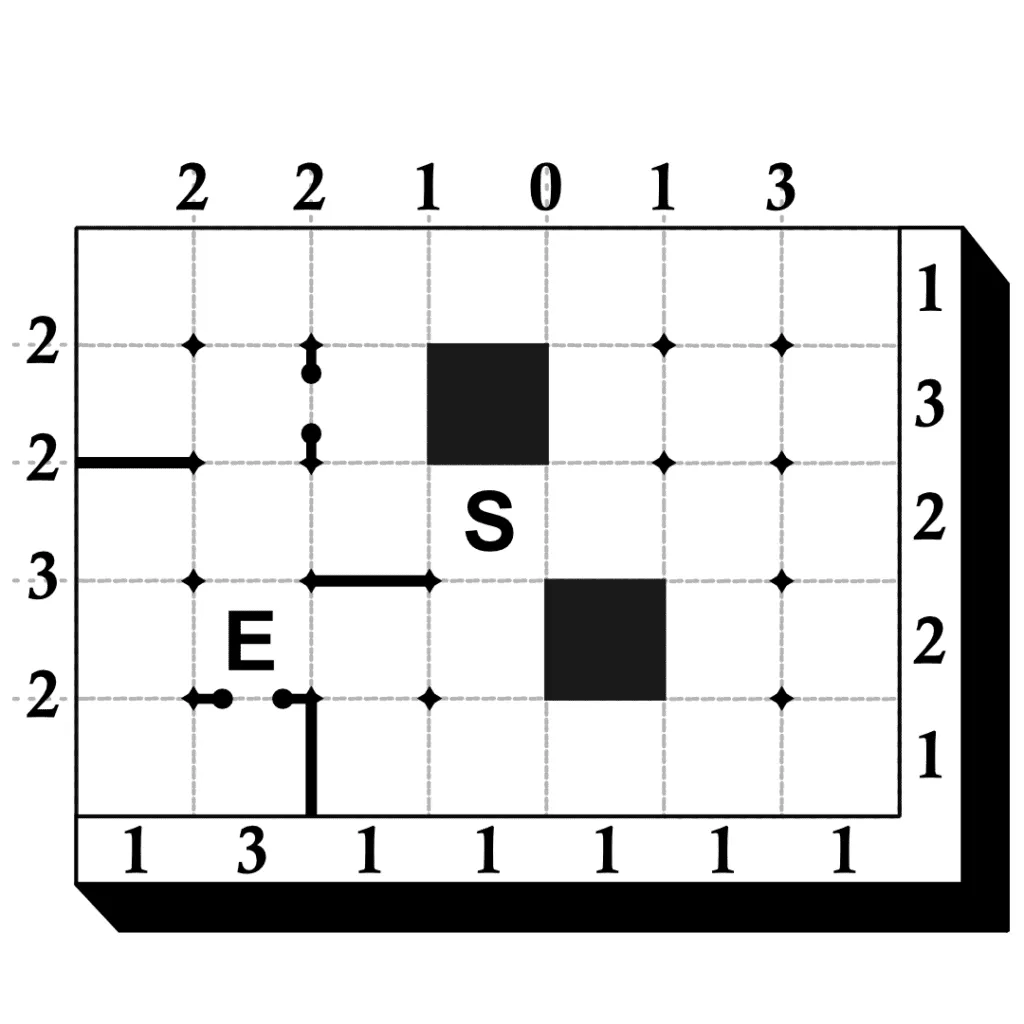
Sunome Variations
The main challenge of a Sunome puzzle is drawing a maze. Numbers surrounding the outside of the maze border give an indication of how the maze is to be constructed. To solve the puzzle you must draw all the walls where they belong and then draw a path from the Start square to the End square.
The walls of the maze are to be drawn on the dotted lines inside the border. A single wall exists either between 2 nodes or a node and the border. The numbers on the top and left of the border tell you how many walls exist on the corresponding lines inside the grid. The numbers on the right and bottom of the border tell you how many walls exist in the corresponding rows and columns. In addition, the following must be true:
Each puzzle has a unique solution.
There is only 1 maze path to the End square.
Every Node must have a wall touching it.
Walls must trace back to a border.
If the Start and End squares are adjacent to each other, a wall must separate them.
Start squares may be open on all sides, while End squares must be closed on 3 sides.
You cannot completely close off any region of the grid.
In addition, these variations of Sunome have the following extra features:
Paths (borders with a hole in the middle) designate places where the solution should pass through.
Pits (black squares) designate places where the solution does not pass through.
Portals (circled letters) designate places where the solution should pass through and teleport from one portal to the other.
Sunome Cubed is solved similarly but on the surface of a cube. The numbers on the top right, top left, and center left of the border tell you how many walls exist on the corresponding pairs of lines inside the grid. The numbers on the center right, bottom right, and bottom left of the border tell you how many walls exist in the corresponding pairs of rows/columns.
Examine the first example, then solve the other three puzzles.
EXAMPLE
Paths and Pits
Paths and Portals
Sunome Cubed
The walls of the maze are to be drawn on the dotted lines inside the border. A single wall exists either between 2 nodes or a node and the border. The numbers on the top and left of the border tell you how many walls exist on the corresponding lines inside the grid. The numbers on the right and bottom of the border tell you how many walls exist in the corresponding rows and columns. In addition, the following must be true:
Each puzzle has a unique solution.
There is only 1 maze path to the End square.
Every Node must have a wall touching it.
Walls must trace back to a border.
If the Start and End squares are adjacent to each other, a wall must separate them.
Start squares may be open on all sides, while End squares must be closed on 3 sides.
You cannot completely close off any region of the grid.
In addition, these variations of Sunome have the following extra features:
Paths (borders with a hole in the middle) designate places where the solution should pass through.
Pits (black squares) designate places where the solution does not pass through.
Portals (circled letters) designate places where the solution should pass through and teleport from one portal to the other.
Sunome Cubed is solved similarly but on the surface of a cube. The numbers on the top right, top left, and center left of the border tell you how many walls exist on the corresponding pairs of lines inside the grid. The numbers on the center right, bottom right, and bottom left of the border tell you how many walls exist in the corresponding pairs of rows/columns.
Examine the first example, then solve the other three puzzles.
EXAMPLE
Paths and Pits
Paths and Portals
Sunome Cubed
Tap reveal to see the solution
🔥 Riddle • Advanced
No Body, No Nose
What do you call a person with no body and no nose?
Tap reveal to see the solution
🔥 Rebus • Advanced
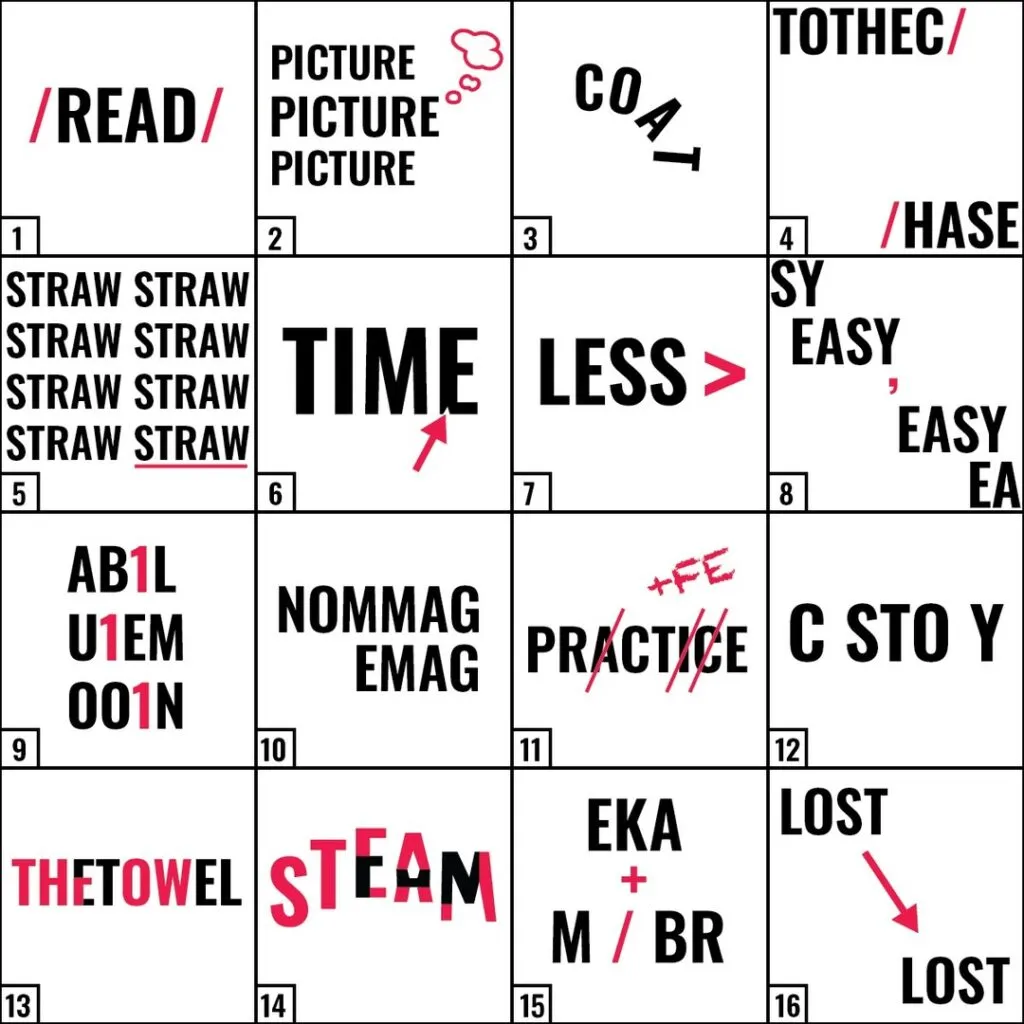
Dr. Riesen’s Rebuses 3
Can you figure out what common phrases these rebuses represent?
Tap reveal to see the solution
🔥 Deduction • Advanced
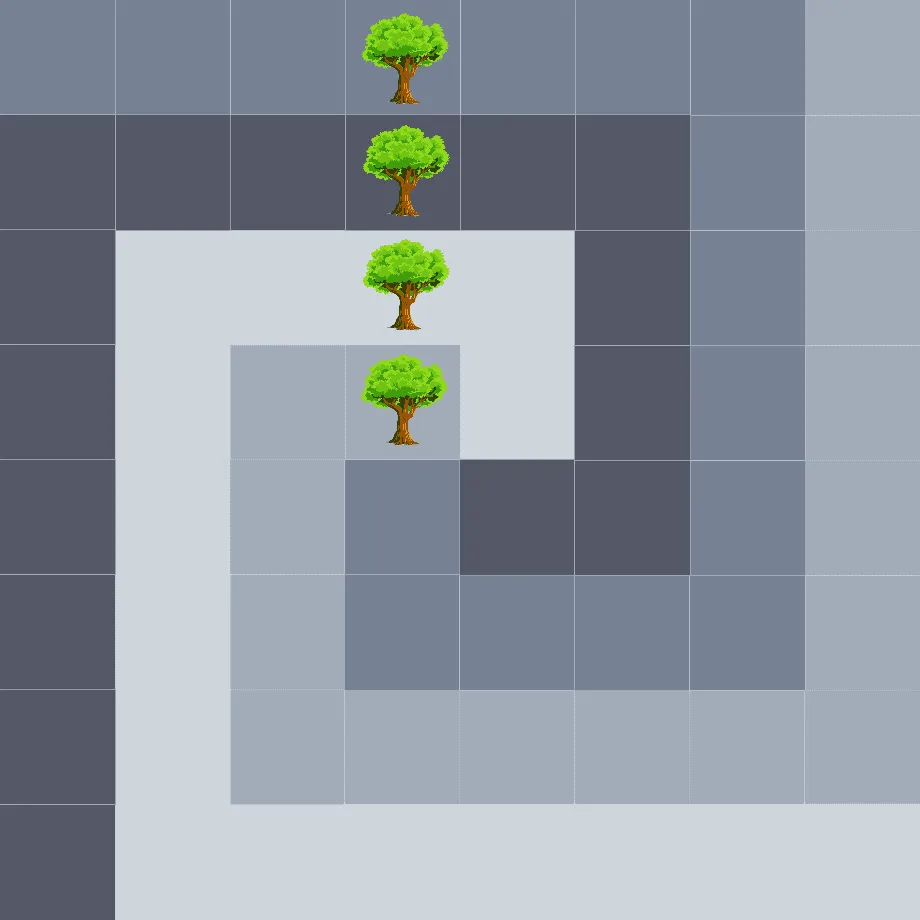
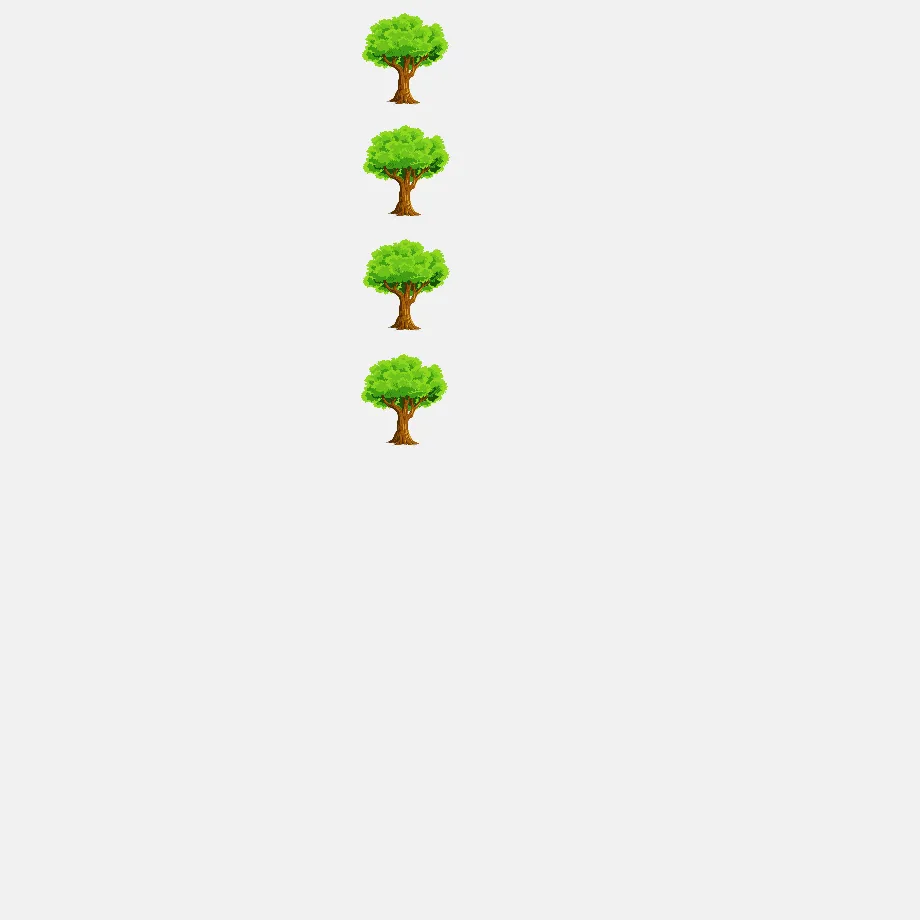
The Four Oaks
A father left to his four sons this square field, with the instruction that they divide it into four pieces, each of the same shape and size, so that each piece of land contained one of the trees. How did they manage it?
Tap reveal to see the solution
🔥 Chess • Advanced
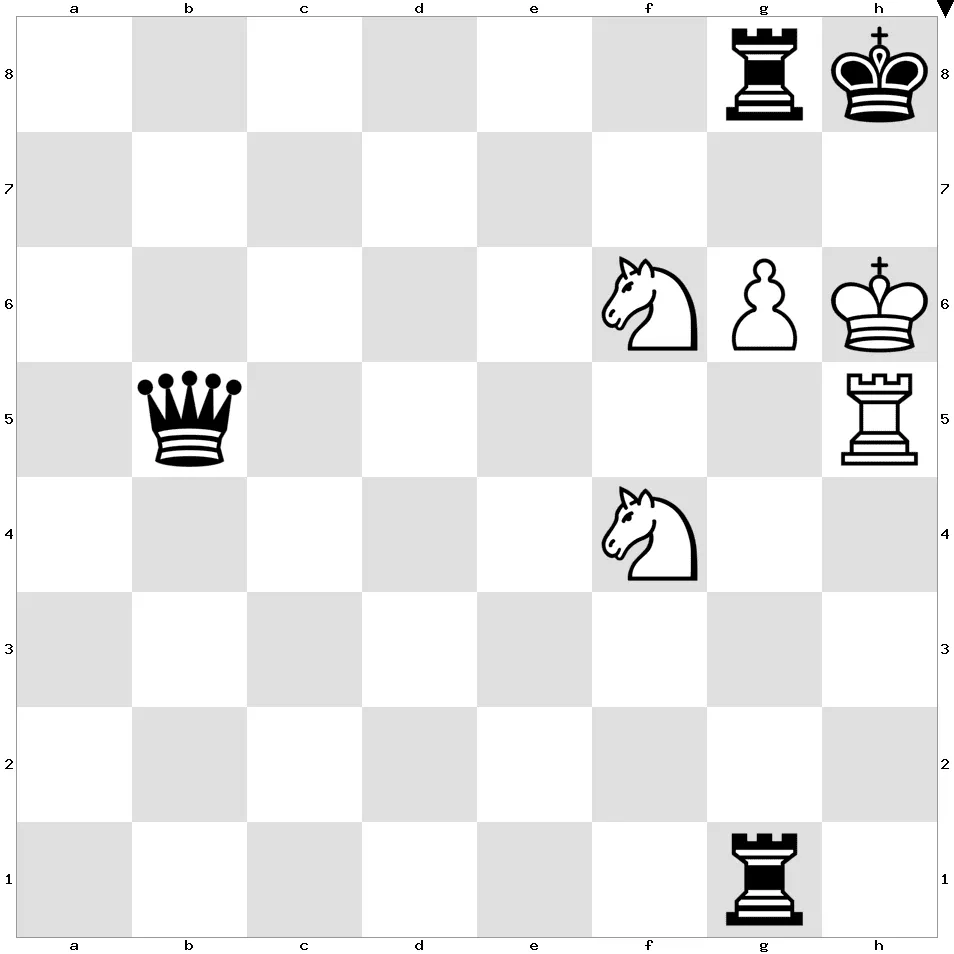
Out of Time
In the position below, Black played a move, but right before he pressed the clock, he ran out of time. However, the judge declared a draw instead of awarding a victory to the opponent. Why?
Tap reveal to see the solution
🔥 Riddle • Advanced
Everything and Nothing
Turn me on my side and I am everything. Cut me in half and I am nothing. What am I?
Tap reveal to see the solution
🔥 Deduction • Advanced
Get One Hundred
9 8 7 6 5 4 3 2 1 = 1 0 0
Add 3 pluses and 1 minus (not necessarily in that order) anywhere above in order to get a valid equality.
Add 3 pluses and 1 minus (not necessarily in that order) anywhere above in order to get a valid equality.
Tap reveal to see the solution