Written by the RobloxGame.app Editorial Team
Last Updated: July 1, 2026
You do not need any special tools or long guidelines to solve riddles. They are a fun way to test your thinking. A good riddle makes you stop, think, and look at the question from a different angle. Some riddles are hard to figure out because they use words in clever ways, while others are hard to remember.
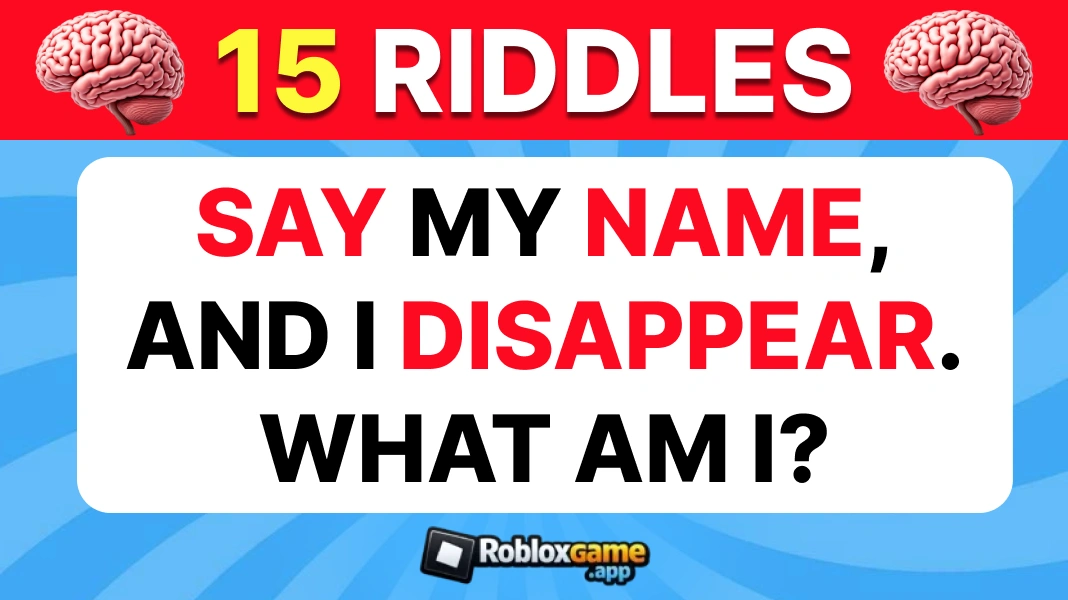
Tricky riddles with answers are a great way to work on your focus and creative thinking if you like brain games. They are fast, safe for families, and good for kids, teens, and adults. There are 15 hard riddles in this article, each with a clear answer and an easy-to-understand explanation. Before you check the answer, see how many you can get right.
Why Tricky Riddles Are Useful for Thinking Practice
Riddles are more than short jokes or fun questions. They encourage you to slow down and think beyond the obvious answer.
When you solve a riddle, you practice:
- Careful reading
- Logical thinking
- Creative thinking
- Memory recall
- Attention to detail
- Problem-solving
Many riddles are tricky because they use simple words in unexpected ways. This can help you practice flexible thinking. Instead of accepting the first answer that comes to mind, you learn to check the question again.
15 Tricky Riddles with Answers
1. What needs to be broken before you can use it?
Answer: Egg
Explanation: You normally need to crack the shell of an egg to be able to cook or eat it. This riddle is a simple one, but tricky as the word broken sounds bad in the first place.
2. I have no mouth, but I can repeat your voice. What am I?
Answer: An echo
Explanation: An echo repeats sounds, so it seems as if it can “talk”. It also reacts to sound, giving the clue the sense that it can “hear.”
3. The more you take, the more you leave. What are they?
Answer: Footfalls
Explanation: Every step you take leaves a footprint or path behind you. The trick is that “take” does not mean to take something.
4. What gets wetter, the more it dries?
Answer: Towel
Explanation: A towel dries other things by absorbing water. So, the towel gets wetter while it is drying other things.
5. What has lots of keys but can’t open any locks?
Answer: A piano
Explanation: The keyboard has keys, but they are musical keys, not keys that open locks.
6. What can go around the world, but stay in a corner?
Answer: A postage stamp
Explanation: A stamp sits in the corner of an envelope, but the envelope can travel across countries or around the world.
7. What has a head, a tail, but no body?
Answer: A coin
Explanation: Many coins have a “head” side and a “tail” side, but they do not have a body.
8. What comes down but never goes up?
Answer: Rain
Explanation: Rain falls from the sky to the ground. The tricky part is that many things can go down and up, but rain only comes down in this context.
9. What has words but never speaks?
Answer: A book
Explanation: A book contains words, stories, and ideas, but it cannot speak by itself.
10. What can you catch but not throw away?
Answer: A cold
Explanation: You can “catch” a cold, which means you can get sick, but you can’t throw it like a ball.
11. What has one eye but can’t see?
Answer: The answer is a needle.
Explanation: The small hole in a needle is called an eye, but the needle can’t see.
12. What do you own that other people use more than you do?
Answer: The answer is your name.
Explanation: Your name is yours, but other people use it when they talk to or about you.
13. What goes up and down but stays still?
Answer: The answer is stairs.
Explanation: Stairs help people get up and down, but the stairs themselves stay where they are.
14. What has hands but cannot clap?
Answer: A clock
Explanation: A clock has hands that show the time, but they are not human hands.
15. What is full of holes but still holds water?
Answer: A sponge
Explanation: A sponge has many small holes, but it can absorb and hold water.
How to Solve Tricky Riddles Faster
Tricky riddles get easier once you understand how they work. Most riddles use just a few common tricks.
Read the Question Carefully
For example: “What can you catch but not throw?” It sounds like a physical object. But the answer uses a different meaning of “catch” (like catching a cold).
Think Beyond the First Meaning
Many riddles use words with more than one meaning. “Keys” can mean lock keys, keyboard keys, or piano keys. “Eye” can be a body part or a hole in a needle.
If the clear answer does not work, ask yourself: Does this word mean something else?
Look for Everyday Objects
Many classic riddles are about common things like towels, clocks, books, coins, and sponges. The answer is often simpler than you think.
Use Logic, Not Guessing
Guessing can be fun, but logic helps you get better. Try to match every part of the riddle with your answer. If even one clue does not conform, your answer is likely wrong.
Riddles and logic puzzles both reward careful thinking and checking the clues.
Best Ways to Use Riddles for Brain Practice
Riddles are a great way to take a quick mental break. You can answer one or two of them during the day when you need a break.
Here are a few easy ways to use them:
- Before you study or work, try one riddle.
- Tell your friends or family riddles.
- Answer riddles without looking up the answer too quickly.
- Write down your first guess, then check it against the right one.
- For variety, mix riddles with other games for your brain.
Riddles are also good for kids because they help them learn new words, listen better, and think outside the box. For adults, they are a fun and easy way to work on being able to think outside the box.
If you enjoy mental challenges, you may also like Sudoku, word search games, logic puzzles, and other riddle challenges.
Conclusion
Tricky riddles are a fun and easy way to test your logic, focus, and creative thinking. Some answers may seem clear once you see them, but that’s what makes riddles fun. Keep practicing, share them with other people, and try more online riddle challenges when you want a quick thinking break.
Frequently Asked Questions
Tricky riddles and answers are short questions that require you to use logic, wordplay, or think outside the box. The clues are often simple answers, but are well written.
Yes, riddles can be useful for thinking practice because they encourage focus, reasoning, memory recall, and flexible thinking.
Like logic riddles for kids, object riddles for kids, animal riddles for kids, and wordplay riddles for kids are good riddles for kids. They should be safe, easy to understand, and not too frustrating.
Read each riddle carefully, think about different meanings of words, avoid rushing, and check how each clue fits the answer. Regular practice helps you recognize common riddle patterns.